
Evidence Article 01
Do Not Stop at IU: Vitamin D Forms Do Not Travel the Same Route
Why vitamin D form matters alongside the number on a label.
BubbForest Clinical Evidence Library
BubbForest Calcifediol Vitamin D3 is developed in collaboration with dsm-firmenich and uses ampli-D® calcifediol. This library explains the ingredient science and human research context behind that formulation choice.
Important distinction: the articles discuss ingredient-level clinical evidence for calcifediol and ampli-D®. They are not clinical trials of the finished BubbForest product and do not promise individual outcomes.
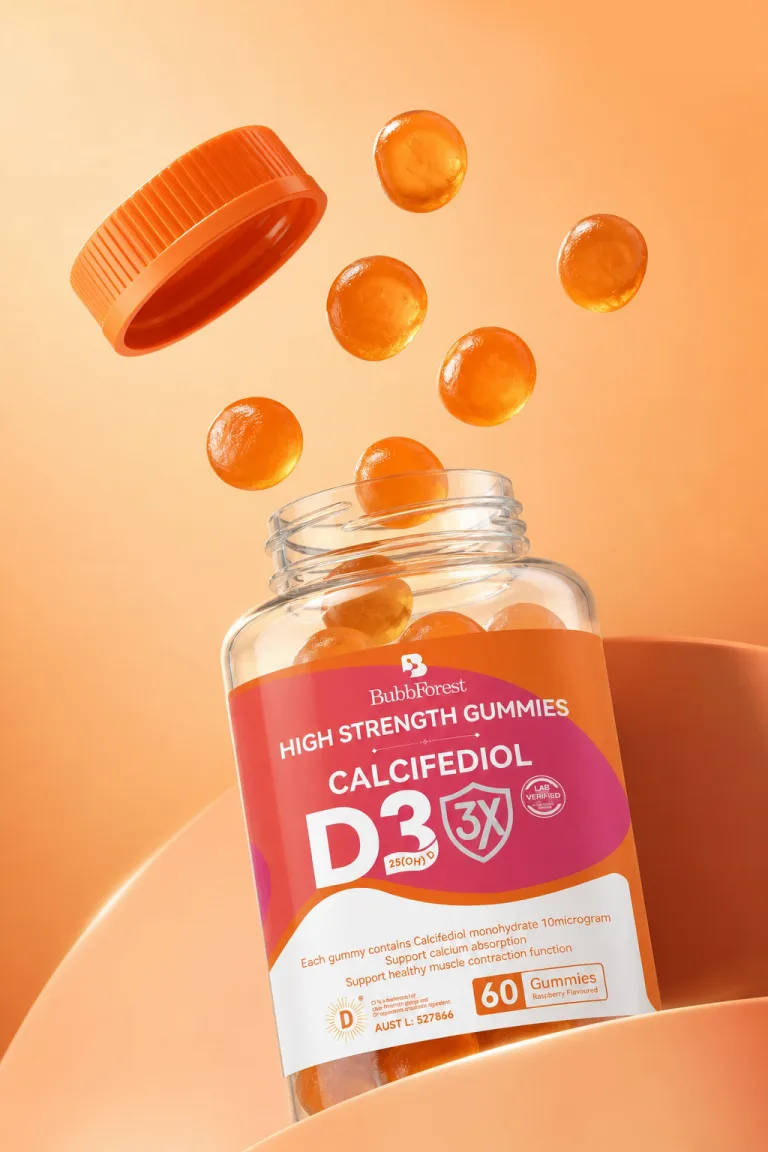
BubbForest uses ampli-D® calcifediol through its collaboration with dsm-firmenich. dsm-firmenich reports that ampli-D® is supported by more than 15 human studies. The evidence library below attributes findings to their specific study populations, doses, schedules, and limitations.
Evidence Article 01
Why vitamin D form matters alongside the number on a label.
Evidence Article 02
How calcifediol and vitamin D3 were compared in winter research.
Evidence Article 03
What study time curves can—and cannot—tell us about vitamin D markers.
Evidence Article 04
A careful guide to total 25(OH)D, free 25(OH)D, and PTH.
Evidence Article 05
A women’s nutrition discussion grounded in vitamin D form and evidence limits.
Evidence Article 06
How to read vitamin D serving information in context.
Evidence Article 07
Why calcifediol and conventional vitamin D3 should not be treated as identical.
Evidence Article 08
Why association research does not establish cardiovascular prevention claims.
Evidence Article 09
How to discuss vitamin D and immunity without overpromising.
Research findings are not personal medical advice. Vitamin D status, testing decisions, and supplementation choices depend on individual context. Always read the final local product label and consult a qualified healthcare professional when you need personal guidance.